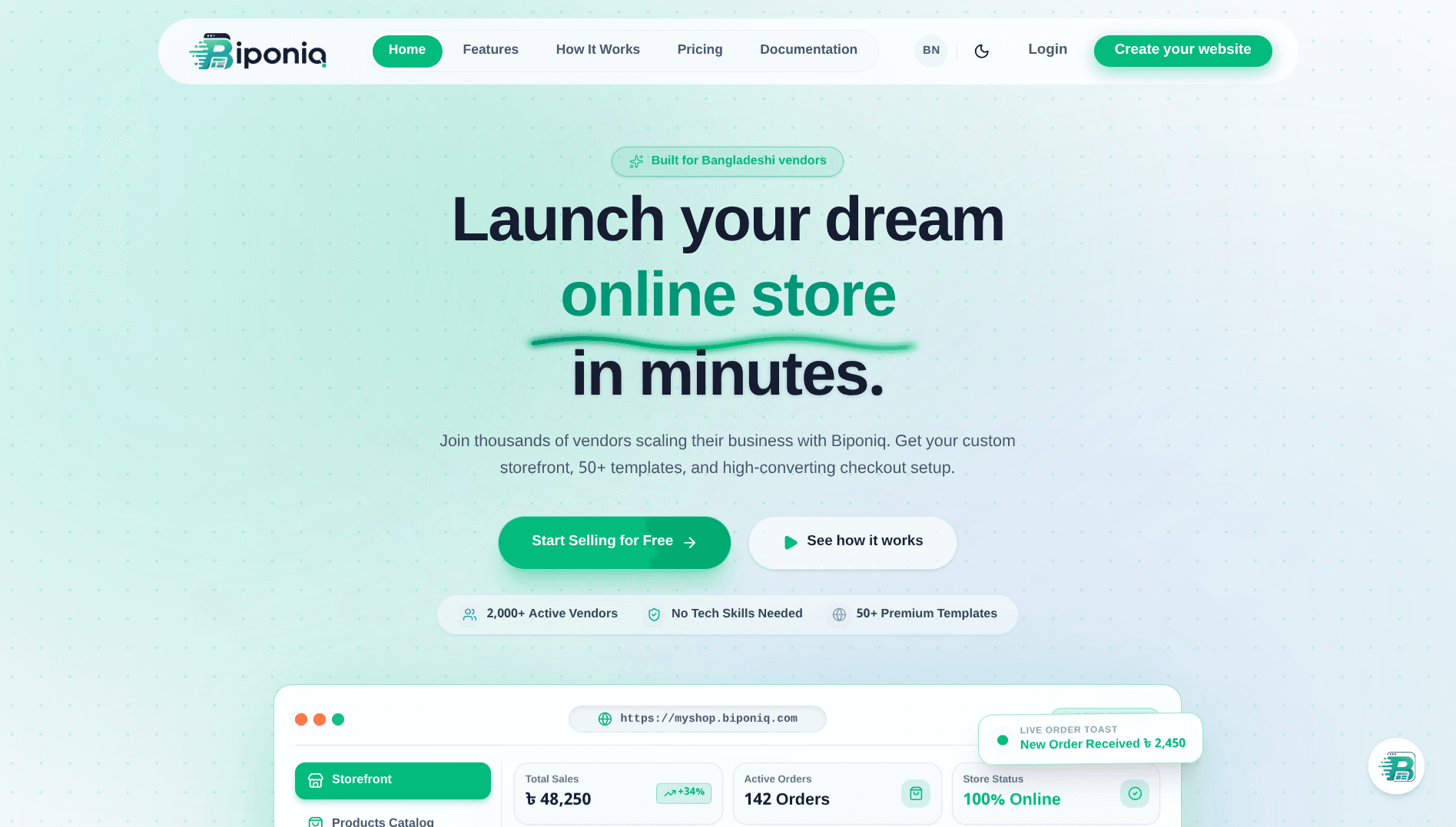
Biponiq is a multi-vendor storefront builder: vendors create branded shops on subdomains or custom domains, sell through local payments including cash-on-delivery, and get paid out by the platform. This case study covers the builder, the payout economy, and the AI assistant.
The Problem
Off-the-shelf store builders fail Bangladeshi vendors on three points: local payment gateways, cash-on-delivery, and courier integration. Vendors also rarely want a website, they want a shop that looks like their brand, so templates and editing matter more than raw feature count. Biponiq answers all of it in one platform: build the store, take the money, deliver the parcel, get paid.
Storefronts Without Code
Each vendor gets a tenant with a subdomain and can attach a custom or purchased domain. A page-template system with a visual editor lets vendors restyle storefronts without touching code, and admin tooling includes controlled impersonation for support work. The backend tracks store subscriptions and visitor-package top-ups, which is how the platform monetizes growth instead of charging one flat fee.
The Payout Economy
Checkout supports SSLCommerz and cash-on-delivery, with courier and delivery-charge modules handling dispatch. On the money side, the platform tracks vendor earnings, cashouts, and an affiliate program with its own payouts, all on the same Express and Prisma PostgreSQL foundation, with Redis and BullMQ keeping queue-heavy work like notifications and scheduled jobs off the request path.
AI and Analytics
Every store gets a Gemini-powered chatbot grounded in a per-store knowledge base, so shopper questions about products and policies get answered with the vendor's own catalog data. Visitor tracking uses geo resolution, and Meta and TikTok pixel event modules let vendors run ad campaigns against real conversion data. Dashboards for admin, vendor, and affiliate roles read from the same schema.
Where It Stands
Biponiq is live at biponiq.com with the storefront builder, payout economy, and AI assistant in production.